Upper GI cancers
Gastritis or stomach cancer? Signs you shouldn’t ignore
Most acidity is just acidity. But some stomach symptoms need an endoscopy, not another strip of tablets. Here is how to tell the difference.
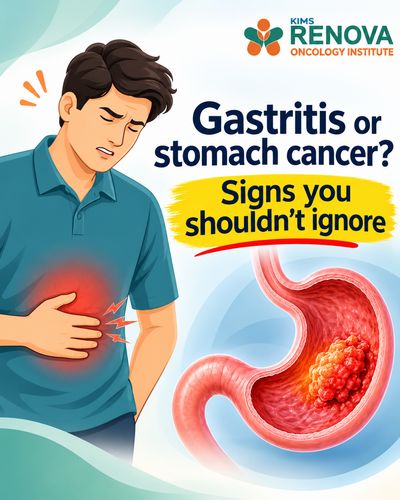
Almost everyone in India has had “gas” or acidity at some point. A heavy meal, a late dinner, too much tea, and the burning starts. You take an antacid, it settles, and life goes on. So when the burning keeps coming back, most people simply buy a bigger strip of tablets.
Usually that’s fine. But stomach cancer symptoms can look almost exactly like ordinary gastritis, especially in the early stages. This article explains which stomach complaints are likely to be harmless, which ones need a proper check, and what that check involves.
Acidity that keeps coming back once the tablets stop is worth a closer look.
Why stomach cancer is easy to miss
It starts quietly. Early stomach cancer often causes no symptoms at all. When symptoms do appear, they are vague: a dull ache above the navel, bloating, burping, a sense of fullness. These are the same complaints people have with gastritis (inflammation of the stomach lining) or a simple stomach upset.
Tablets can hide it. Antacids and acid-reducing medicines can ease the discomfort for weeks, even when something more serious is going on. Feeling better on tablets doesn’t prove the problem is minor.
We tend to wait. Many people put off a check-up because they’re afraid of what the doctor might find, or because they don’t want to trouble the family. By the time weight loss or vomiting makes them come in, the disease may have grown.
In my practice, I often meet patients who have been taking acidity medicines for several months without investigating why their symptoms keep returning. What I want people to understand is that temporary relief is not the same as knowing the cause. If symptoms persist, a proper evaluation is always better than repeatedly changing medicines.
Stomach cancer symptoms that need attention
Most of these symptoms turn out to have other causes. Still, each of them is a reason to see a doctor rather than self-medicate:
- Losing weight without trying
- Feeling full after eating only a small amount
- Loss of appetite, especially a new dislike of food you used to enjoy
- Pain or discomfort in the upper abdomen that doesn’t go away
- Nausea or repeated vomiting
- Vomiting blood, or material that looks like coffee grounds
- Black, sticky, tar-like stools
- Tiredness and breathlessness from low haemoglobin (anaemia)
- Difficulty swallowing, or food feeling stuck in the chest
Age matters. Indigestion that begins for the first time after about 45 years of age deserves a closer look, even without any of the signs above.
Who is at higher risk?
H. pylori infection. Helicobacter pylori is a common bacterium that lives in the stomach lining. Most people who carry it never develop cancer, but long-term infection is the biggest known risk factor for the most common type of stomach cancer. The World Health Organization’s cancer agency has classified it as a cause of cancer since 1994. It can be tested for and treated with a course of medicines your doctor prescribes.
Tobacco and alcohol. Smoking and chewing tobacco both raise the risk, and heavy drinking adds to it.
Diet. Diets high in salt, salted or smoked foods and pickles, and low in fresh fruit and vegetables, are linked to higher risk.
Family history. Having a parent, brother or sister with stomach cancer raises your risk. Tell your doctor about it, even if your symptoms seem mild.
Previous stomach problems. Long-standing stomach ulcers, earlier stomach surgery and some types of anaemia also add to the risk.
A common misunderstanding: “It’s just gas”
Many people describe their symptoms as “only gas” because they come and go. But stomach cancer doesn’t cause constant pain from day one. Symptoms that come and go for several weeks, or keep returning after you stop the tablets, are exactly the ones worth checking.
Another common worry is that an endoscopy is painful or dangerous. For most people it’s neither. It’s a short, routine test, and it gives a clear answer that months of guessing cannot.
What happens at an endoscopy?
An upper GI endoscopy is a test in which a thin, flexible tube with a camera is passed through the mouth to look at the food pipe, stomach and the first part of the small intestine.
- You’ll be asked not to eat or drink for several hours before the test. The hospital will tell you exactly how long.
- Your throat is numbed with a spray, and many centres also offer a mild sedative so you feel relaxed or sleepy.
- The test itself usually takes 10 to 15 minutes.
- If the doctor sees anything unusual, they take a tiny piece of tissue (a biopsy). You won’t feel this.
- Biopsy results usually take several days. The doctor can often tell you what they saw on the camera the same day.
If you had sedation, bring a family member with you, and don’t drive for the rest of the day.
If stomach cancer is found, the Upper GI cancers page explains the next steps, including staging scans and treatment options.
When to see a doctor
Book a check-up within the next week or two if you have:
- Acidity or indigestion for more than two to three weeks that keeps returning
- New indigestion after about 45 years of age
- Any of the warning signs listed above, even if they’re mild
Go to an emergency department straight away if you:
- Vomit blood or coffee-ground material
- Pass black, tarry stools along with dizziness or fainting
- Have severe abdominal pain that doesn’t settle
Frequently asked questions
Can gastritis turn into stomach cancer?
Ordinary short-term gastritis doesn’t turn into cancer. Long-standing inflammation, especially from untreated H. pylori infection, can slowly change the stomach lining over many years and raise the risk. That’s one reason persistent symptoms deserve a proper check.
Is stomach cancer curable?
When it’s found early, stomach cancer can often be treated successfully, usually with surgery. The outlook depends on the stage at diagnosis, which is why early testing matters so much.
Will an endoscopy show if I have cancer?
An endoscopy shows the inside of your stomach clearly, and a biopsy confirms whether any abnormal area is cancer. It’s the most reliable test for this. Blood tests and ultrasound alone can’t rule stomach cancer out.
Should I get tested for H. pylori?
If you have ongoing indigestion, ulcers, or a close relative with stomach cancer, ask your doctor whether testing is right for you. Testing everyone without symptoms isn’t routinely recommended.
Talk to a specialist
If your stomach symptoms have been bothering you for weeks, it’s worth getting a clear answer. You can book a consultation with Dr. Suraga Belakawadi at KIMS RENOVA Oncology Institute, Mahadevpura, Bengaluru, in person or by video.
Related reading
References
- American Cancer Society. Signs and Symptoms of Stomach Cancer. cancer.org
- US National Cancer Institute. Helicobacter pylori and Cancer (fact sheet). cancer.gov
- ASCO / Cancer.Net. Stomach Cancer: Symptoms and Signs. cancer.net
- US National Cancer Institute. Gastric Cancer Treatment (PDQ), Patient Version. cancer.gov
This article is general information to help you understand a condition. It is not a diagnosis or a substitute for a consultation. See the medical disclaimer.